What Is Gut Health in Dogs and Cats—and Why Should Pet Parents Care?

What Is Gut Health in Dogs and Cats—and Why Should Pet Parents Care?
Gut health means the balance of the digestive system and the gut microbiome (the community of beneficial microorganisms living in the intestines).
When this system works well, it supports overall health in many ways, such as:
Efficient digestion
Better nutrient absorption
Normal bowel movements (well-formed, consistent stools)
Stronger immunity and overall vitality
On the other hand, when the gut becomes imbalanced, pets may experience diarrhea, bloating, gas, strong stool odor, loss of appetite, or a general decline in wellness.
Common Signs That Your Pet’s Gut May Be Out of Balance
Many pet parents often ask, “Is this related to gut health?”
Here are some common signs to watch for:
Soft stools or diarrhea / more frequent bowel movements than usual
Hard stools, straining, constipation, or irregular bowel habits
Bloating, gas, stronger stool odor
Poor appetite, weight fluctuations, low energy
(Cats) frequent vomiting or hairballs along with inconsistent stools
⚠️ See a veterinarian immediately if symptoms are severe—such as blood in stool, extreme lethargy, repeated vomiting, or signs of dehydration.
What Usually Causes Digestive Issues in Dogs and Cats?
Common causes include:
Switching food too quickly (the gut doesn’t have time to adapt)
Stress, environmental changes, or routine disruption
Eating unsuitable foods or foreign objects
Getting the wrong type or amount of fiber for a sensitive gut
(Cats) low water intake, which can lead to constipation or hard stools
An imbalance of gut microorganisms
Why Do Pets Often Have Digestive Upset After a Food Change?
A major reason is changing food too fast, which can disrupt digestion and the gut microbiome—especially in pets with a sensitive gut.
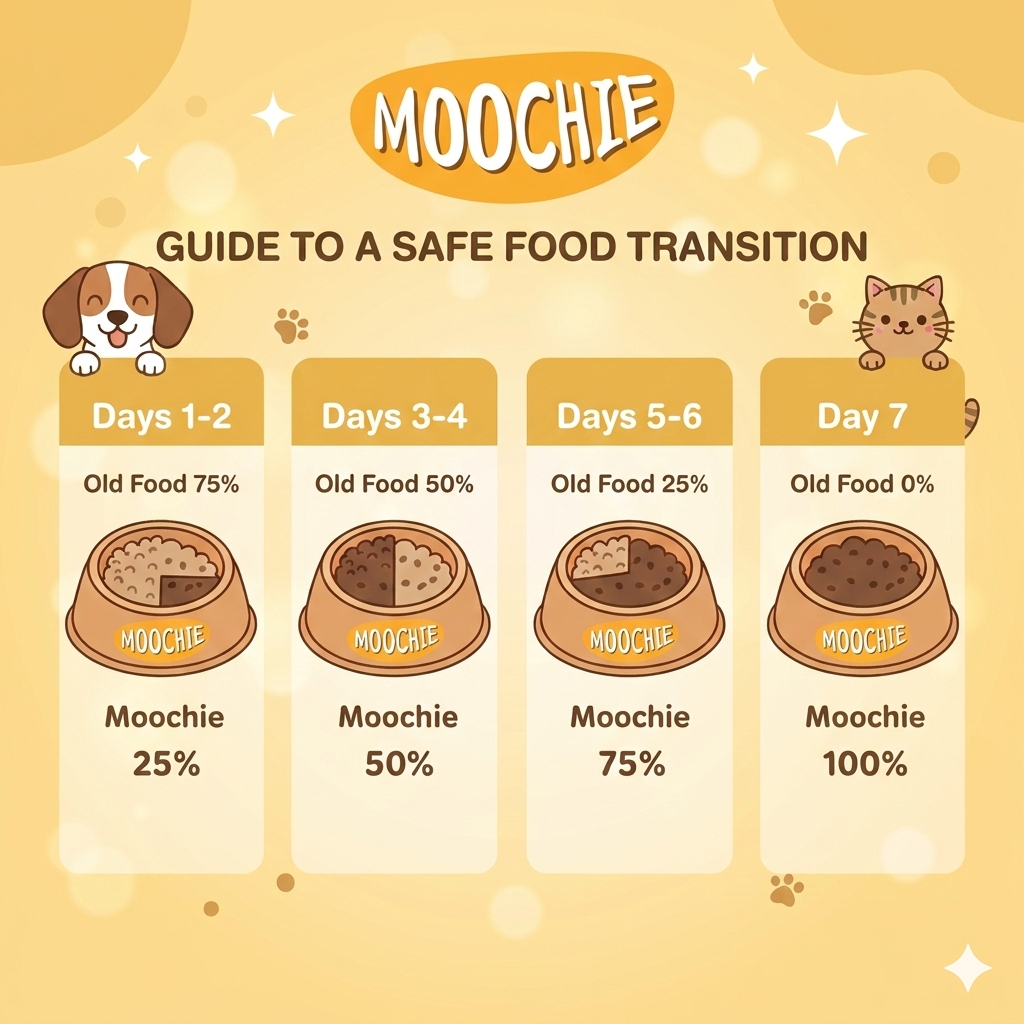
During the transition, monitor:
Stool quality (shape, frequency, odor)
Appetite and energy level
Water intake
If diarrhea begins, pause at the current ratio for 1–2 more days. If symptoms worsen or persist, consult your veterinarian.
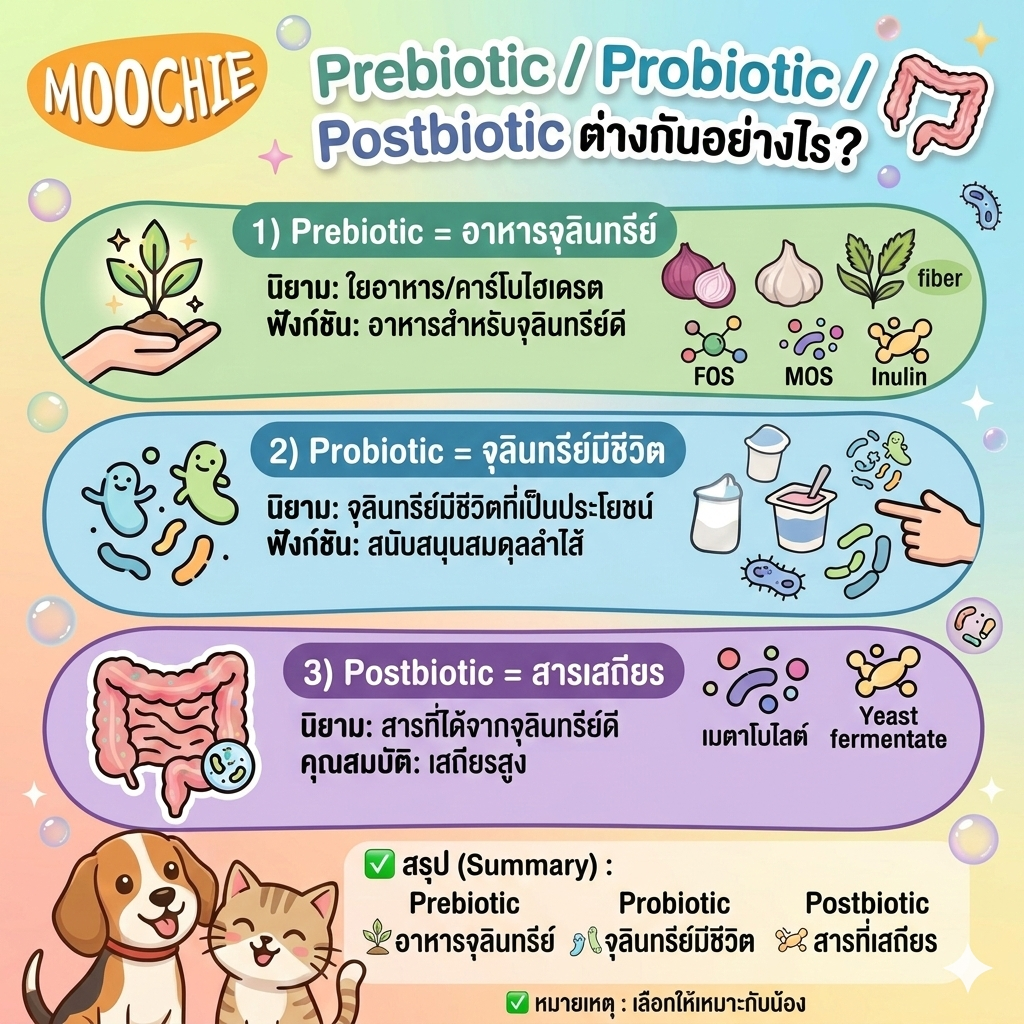
Prebiotics vs Probiotics vs Postbiotics: What’s the Difference?
1) What Are Prebiotics?
Prebiotics are fibers or certain carbohydrates that the body doesn’t fully digest. They act as food for beneficial bacteria in the gut.
They’re often associated with better microbial balance and more consistent stools.
Common prebiotics found in pet food:
FOS (Fructooligosaccharides)
MOS (Mannan-oligosaccharides)
Inulin
GOS (Galacto-oligosaccharides)
β-glucans (often from yeast or certain grains)
Plant fibers such as beet pulp, psyllium husk, cellulose (sometimes used to support stool formation)
Content note: Some “dietary fibers” can function like prebiotics, but results depend on the type, amount, and each pet’s gut sensitivity.
2) What Are Probiotics?
Probiotics are live beneficial microorganisms that, when consumed in appropriate amounts, may help support gut balance.
Common probiotics used in pet foods or supplements:
Lactobacillus (e.g., L. acidophilus, L. rhamnosus)
Bifidobacterium (e.g., B. animalis)
Enterococcus faecium (in some formulas)
Bacillus (e.g., B. subtilis, B. coagulans) — spore-forming, more stable
Certain yeasts such as Saccharomyces boulardii (more common in supplements)
Key points to know:
Because they are live, stability can be affected by heat, moisture, and manufacturing processes
Labels may show CFU counts or specific strains, which can impact effectiveness
3) What Are Postbiotics?
Postbiotics are beneficial substances produced by probiotics (such as metabolites or components from beneficial microbes).
They’re often described as more stable, making them suitable for formulas that require consistent quality over time.
Common examples (often referenced in pet nutrition):
Yeast fermentate / yeast postbiotic
Certain yeast-derived components used in related concepts (e.g., β-glucans, mannan fractions)
Some fermentation-related metabolites such as certain organic acids (in some formulas)
How to Choose: Pre / Pro / Postbiotics
If your pet has inconsistent stools or a sensitive gut, many start with formulas containing fiber + prebiotics in appropriate amounts
If you want consistent, long-term support, formulas with postbiotics are often chosen for their stability
Probiotics may be included in foods or supplements, but consider stability and storage conditions
✅ Note: Too much prebiotic fiber in some pets may cause gas, bloating, or diarrhea. Choose an amount suitable for your pet’s sensitivity, and consult a veterinarian if symptoms don’t improve.
Summary
Prebiotics = food for beneficial gut bacteria (e.g., FOS/MOS/Inulin)
Probiotics = live beneficial microorganisms (e.g., Lactobacillus/Bifidobacterium)
Postbiotics = beneficial substances produced by microbes; often more stable for long-term use
If Your Dog or Cat Has Gut Issues, Where Should You Start?
Choose food formulated to support digestive health
Look for formulas with fiber + prebiotics/postbiotics in suitable amounts
Transition food gradually (7-day schedule)
Ensure adequate water intake (especially in cats)
Reduce stress and make routine changes slowly
If symptoms persist or are severe, consult a veterinarian
Moochie’s Approach to Digestive Health
At Moochie, we believe a pet’s well-being starts from within.
Food isn’t designed just to satisfy hunger for one meal—it’s made to support long-term health.
Our key principles include:
Selecting ingredients suitable for sensitive digestion
Nutrition that supports gut balance
Everyday care that’s practical and sustainable for pet parents
Recommended Formulas for Pets with Sensitive Digestion
Explore our products at: Moochie with Chicken Liver (Digestive Care) for dogs
Explore our products at: Pate with Anchovy (Digestive Care) for cats
Suitable for pets who experience:
Frequent diarrhea
Inconsistent stools
Bloating or digestive sensitivity
Digestive support highlights:
Contains prebiotics to support beneficial gut bacteria balance
Spinach to provide fiber for healthy bowel movements
Coconut oil to support gentle digestion and gastrointestinal comfort
Feeding During a Formula Change
We recommend a gradual transition within 7 days to reduce the risk of diarrhea and help your pet adjust comfortably.
FAQ: Common Questions About Gut Health and Bowel Movements in Pets
What do prebiotics do?
They support beneficial gut bacteria and are linked to digestion and more consistent stools.
What is FOS?
FOS is a type of prebiotic that feeds beneficial bacteria and helps maintain gut balance.
What can cause diarrhea in dogs?
Common causes include switching food too quickly, eating unsuitable foods, stress, or gut imbalance. If severe or persistent, consult a veterinarian.
What causes constipation in dogs?
Often related to low water intake, insufficient fiber, low activity, or stress. If your dog can’t pass stool for a long time or seems in pain, see a veterinarian.
How does fiber help constipation?
Fiber helps stool form and regularity and supports intestinal movement—along with adequate hydration.
Can frequent constipation in cats be related to food?
Yes. Water intake, fiber, and digestive sensitivity can all play a role. If constipation is severe or your cat seems unwell, consult a veterinarian.
Can prebiotics help with cat stool issues?
As a type of fiber, prebiotics may support stool consistency and gut balance in some cases.
Are frequent vomiting/hairballs in cats related to digestion?
They can be—especially in indoor cats with sensitive digestion and hairball management needs.
Can stress cause diarrhea in cats?
Yes. Changes in environment or routine can affect the digestive system in some cats.
Updated on : 28 February 2026