Our Blogs

Stories That Inspire


  • 2025
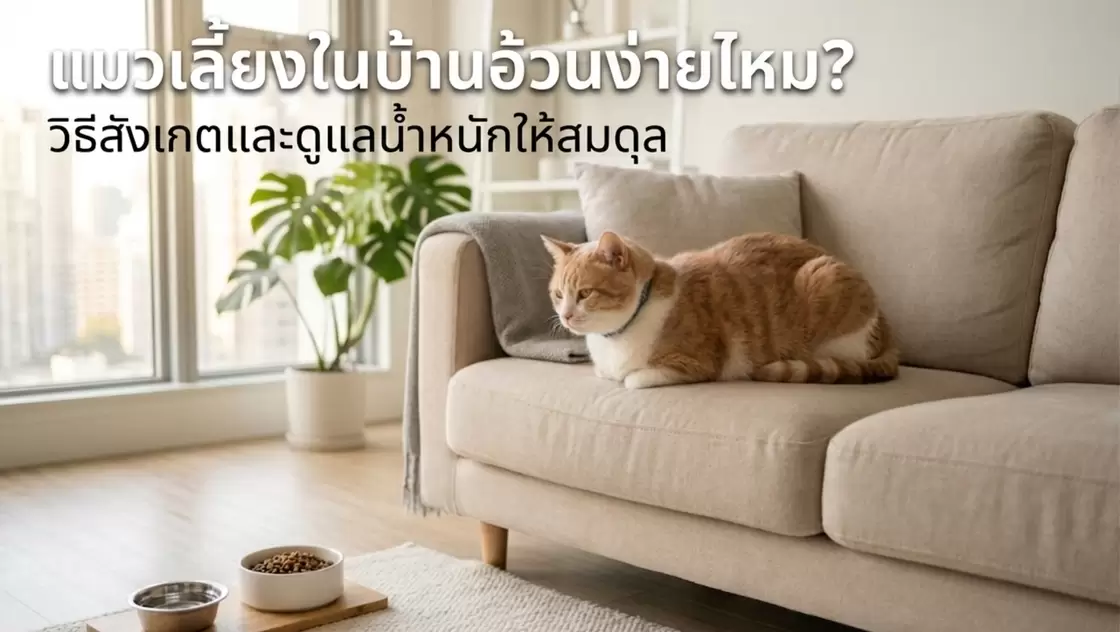
แมวเลี้ยงในบ้านนั่งบนโซฟาพร้อมชามอาหาร บทความแนะนำวิธีสังเกตและดูแลน้ำหนักแมวให้สมดุล

Do Indoor Cats Gain Weight Easily? How to Spot the Signs and Manage Their Weight

Do Indoor Cats Gain Weight Easily? How to Spot the Signs and Help Maintain a Healthy WeightMany people believe that indoor cats are likely to be healthier because they do not face risks such as traffic, dust, or fights with other cats. In many ways, that is true. However, living indoors all the time can also cause owners to overlook another important issue: body weight, which may gradually increase without being noticed.Many indoor cats spend most of their time sleeping, eating, and resting. If they have very little activity during the day but continue to receive the same amount of food every day, their weight may slowly increase over time, eventually affecting their mobility and overall health in the long run.This is especially important for sterilised cats. Owners should pay even closer attention, as many cats begin asking for food more often after sterilisation while becoming less active than before. That is why managing food and lifestyle becomes an even more important part of daily care.Why Are Indoor Cats More Likely to Gain Weight?It is not because staying indoors is unhealthy, but because an indoor lifestyle naturally tends to reduce a cat’s energy use.Think of it this way: if a cat wakes up, eats, walks around a little, naps by the window, and then rests again, the energy used during the day will be very different from that of a cat that climbs, runs, and explores different spaces throughout the day.Factors that may make indoor cats more likely to gain weight include:leaving food out all day, which makes portion control difficult giving treats or supplements too often during the day choosing food that does not match the cat’s lifestyle continuing the same feeding routine after sterilisation not having enough activity during the day owners not noticing gradual weight gain over time These changes may not be obvious at first, but as they continue, many owners begin to notice that their cat feels heavier, runs less, or no longer moves as easily as before.Signs Your Cat May Be Starting to Gain Too Much WeightOne reason this can be difficult to notice is that owners see their cats every day, so small gradual changes may go unnoticed.Look out for these signs:your cat’s body looks fuller or heavier than usual the ribs are harder to feel fat begins to accumulate around the belly or the abdomen starts to sag your cat runs and jumps less your cat sleeps more or gets tired more easily your cat asks for food often but shows less interest in playing If several of these signs appear together, it may be a sign that your cat is taking in more energy than needed each day, and it may be time to start adjusting their care early.How to Help Maintain a Healthy Weight in Indoor CatsManaging weight does not need to begin with a drastic cut in food. It is better to start by adjusting care to better suit your cat’s needs.1) Control Food Portions ProperlyDo not rely only on visual estimation. What feels like “just a little” to an owner may still be more than the cat actually needs. Measuring food according to body weight, age, and activity level can make portion control much more accurate.2) Choose Food That Matches Your Cat’s LifestyleIndoor cats, sterilised cats, and cats that need support for coat condition or overall health may all have different nutritional needs. Choosing a formula that suits your cat’s lifestyle can make long-term care easier.3) Increase Daily ActivityEven indoor cats can move more with the right encouragement. Wand toys, chase toys, cat trees, or short play sessions two to three times a day can all help support healthy weight balance.4) Monitor Body Shape and Weight RegularlyDo not wait until your cat is obviously overweight before taking action. Once excess weight builds up, it can be harder to manage. Observing your cat’s body shape and checking weight regularly can help you adjust food and activity in time.5) Avoid Overindulging Too OftenIn many cases, weight gain does not come only from main meals. It may also come from treats, small bites given throughout the day, or adding extra food whenever the cat asks. Balanced care is often better than feeding out of affection too often.How Can Wet Food Help Indoor Cats?For households with indoor cats, wet food can be another practical option. In addition to adding more moisture to each meal, it can make meal planning easier for owners, help with portion control, and allow more flexibility in choosing formulas that match a cat’s needs at different stages of life.For some households, choosing food that suits a cat’s lifestyle may make weight management and overall care much easier in daily life.Shop Explore all Moochie wet food formulasIf Your Cat Lives Mostly Indoors, Which Formula Should You Choose?Moochie has developed a range of wet food formulas to support different feline lifestyles, because we understand that not all cats live the same way. Some cats are indoor cats with lower activity levels, some are sterilised, some need extra support for coat and skin, and some owners simply want to support their cats’ overall health every day.Moochie Indoor Cat FormulaIf your cat lives in a condo or spends almost all of its time indoors, this formula is a good starting point for owners who want to choose food that better matches an indoor lifestyle.Shop  Moochie Indoor Cat FormulaMoochie Skin & Coat FormulaFor owners who want to support their cat’s coat and skin condition, this formula is a suitable option. A soft, healthy coat does not come from grooming alone; daily nutrition also plays an important role.Shop Moochie Skin & Coat FormulaMoochie Formula for Sterilised CatsIf your cat has been sterilised, or if you are concerned about choosing the right diet for this stage of life, this formula can help make daily feeding more suitable for a post-sterilisation lifestyle.Shop Moochie Formula for Sterilised CatsMoochie Formula for Overall Health SupportIf you are looking for an option that helps support your cat’s well-being every day, this formula is another interesting choice.Shope Moochie Formula for Overall Health SupportStill Not Sure Which Formula to Choose?You can choose based on your cat’s main needs:If your cat mostly stays indoors and has low activity, start with Shope Indoor Cat FormulaIf you want to focus on coat and skin care, choose Shope Skin & Coat FormulaIf your cat is sterilised or you are concerned about weight balance, choose Shop Formula for Sterilised CatsIf you want to support overall health every day, choose Shope Formula for Overall Health SupportConclusionIndoor cats can indeed gain weight more easily, especially if they have low activity levels, receive more food than they need, or have already been sterilised. The good news is that owners can start making a difference today by controlling portions, choosing a formula that suits their cat’s lifestyle, and building more regular activity into the day.Good care begins with small daily habits, and choosing food that matches your cat’s needs is another important part of making long-term care easier and more effective.Shop the Right Formula for Your CatFAQQ : Do indoor cats gain weight more easily than outdoor cats?A : In many cases, yes. Indoor cats often move less and use less energy. If they receive more food than they need each day, weight gain can happen more easily.Q : Should I change my cat’s food after sterilisation?A : Owners should consider choosing food that is more suitable for the post-sterilisation stage, because some cats may eat more and move less than before, which makes balanced nutrition more important.Q : Is wet food suitable for indoor cats?A : Yes, it can be a good option for many households. Wet food helps increase moisture intake and can also make portioning meals easier for owners.Q : What should I choose if I want to support my cat’s coat condition?A : If you want to focus on coat and skin care, you can choose a formula specifically designed to support these needs more directly.Q : What should I do first if my cat is starting to gain weight?A : Start by observing how much food your cat receives each day, reduce unnecessary extra feeding, increase daily activity, and choose food that better matches your cat’s lifestyle. If the weight continues to increase, consult a veterinarian for personalised advice.Updated on : 24 April 2026

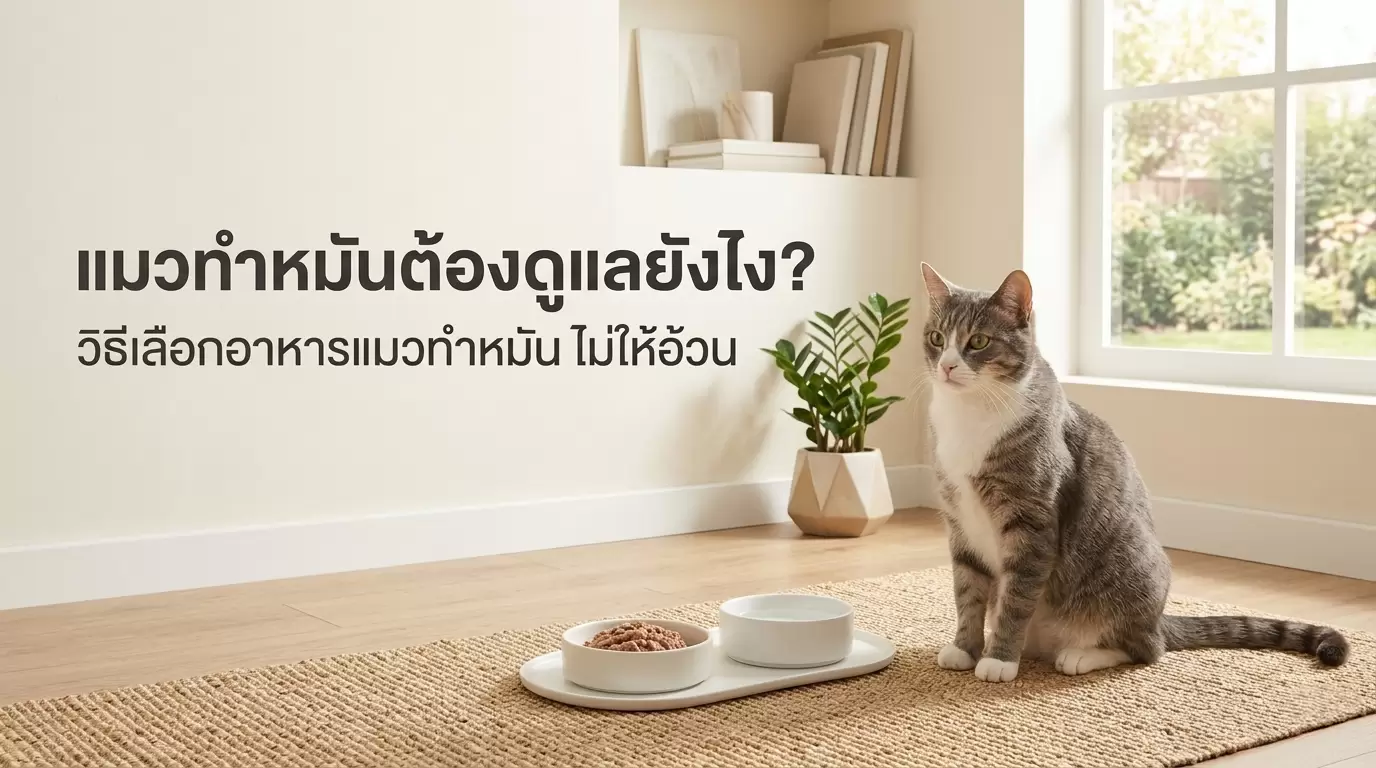
แมวทำหมันต้องดูแลยังไง? วิธีเลือกอาหารแมวทำหมัน ไม่ให้อ้วน

How to Care for Sterilised Cats and Choose the Right Food

How to Care for a Sterilised Cat: How to Choose the Right Food to Prevent Weight Gain and Support Long-Term HealthSterilisation is an important step that many cat owners choose to support their cat’s long-term health, behaviour, and overall quality of life. However, after sterilisation, many owners begin to notice changes such as increased appetite, lower activity levels, and easier weight gain. This often leads to a common question: how should you care for a sterilised cat, and what type of food is most suitable?This article is designed as an easy guide for cat owners, covering how to care for a cat after sterilisation, which signs to watch for, and how to choose the right food to support healthy weight management, digestive balance, and urinary tract health in the long term. Summary for Cat OwnersAfter sterilisation, cats often become more food-motivated, use less energy, and gain weight more easily than before. To keep them healthy, owners should focus on:controlling portions based on body weight and activity level choosing food formulated for sterilised cats or food with appropriate calorie levels encouraging regular play and movement supporting hydration and urinary tract health alongside daily nutrition Why Do Sterilised Cats Need Special Care?After sterilisation, cats go through hormonal and behavioural changes that can affect how much energy they use each day. As a result, many cats may:eat more than before  become less active gain weight more easily accumulate body fat faster become more prone to weight-related and urinary tract issues if their care is not adjusted properly For this reason, sterilisation should not be seen as the end of the process. Owners need to adapt daily care to match their cat’s new lifestyle, especially in terms of food, portion control, hydration, and regular weight monitoring.Common Changes in Cats After Sterilisation1)Increased AppetiteMany cats become more interested in food after sterilisation. They may eat faster, ask for food more often, or appear hungrier throughout the day. This can easily lead to overfeeding without owners realising it.2)Reduced Energy UseWhen cats move less but continue eating the same amount, or more, weight gain becomes much more likely. This is especially common in indoor cats.3)Easier Weight Gain and Changes in Body ShapeOwners may begin to notice that their cat feels softer, develops more fat around the belly, loses a defined waistline, or becomes less playful than before.4)Greater Need for Urinary Tract SupportSome sterilised cats, particularly those that drink very little water, may need extra nutritional and hydration support to help maintain urinary tract health and overall balance.Do Sterilised Cats Gain Weight More Easily?Yes, they often do. If owners continue feeding the same amount of food without adjusting for post-sterilisation changes, weight gain can happen quite quickly.This is usually because three things tend to happen at the same time:appetite increases energy expenditure decreases physical activity is reduced The goal is not to cut food too drastically, but to choose the right food for sterilised cats and provide portions that match the cat’s actual body condition and daily lifestyle.What Should Food for Sterilised Cats Include?When choosing food for a sterilised cat, it is important to look beyond the word “sterilised” on the label. The overall nutritional profile should be suitable for the cat’s specific needs.1) Appropriate Protein LevelsCats are carnivores, so they still require sufficient protein to help maintain lean muscle mass and support daily health.2) Moderate Calorie ContentBecause sterilised cats often use less energy, food with suitable calorie levels can help owners manage body weight more effectively.3) Fibre or Ingredients That Help Promote SatietyCertain types of fibre may help cats feel full for longer and reduce food-seeking behaviour between meals.4) Digestive SupportWhen digestion and bowel movements are well balanced, it becomes easier to maintain long-term health and comfort.5) Urinary Tract SupportIndoor cats and cats that drink little water may benefit from food that supports hydration and urinary health as part of everyday care.Practical Daily Care Tips for Sterilised Cats1)Monitor Weight RegularlyWeigh your cat every 2 to 4 weeks if possible. This helps you spot early weight gain before it becomes a bigger issue.2) Divide Meals Into Smaller PortionsFeeding 2 to 4 meals a day may help reduce hunger and make portion control easier.3) Encourage Play and ActivityUse teaser toys, interactive toys, or puzzle feeders to keep your cat moving and mentally stimulated.4) Support HydrationWater intake is especially important for sterilised cats, particularly those that eat mostly dry food. Multiple water bowls, cat fountains, or wet food can help increase daily moisture intake.5) Watch Stool and UrinationChanges in stool consistency, litter box frequency, straining, or reduced urination should be monitored carefully.Why Wet Food Can Be a Good Choice for Sterilised CatsWet food can be an excellent option for many sterilised cats, especially those that do not drink enough water. Because wet food contains higher moisture than dry food, it can help increase daily water intake more easily.Wet food is also often more aromatic and easier for cats to enjoy, which makes feeding more convenient for owners. However, it is still important to choose a formula that matches the cat’s life stage and condition, such as a formula for adult sterilised cats or one designed to help with weight control.How to Choose the Right Food for a Sterilised CatBefore making a decision, check these five points:It is suitable for your cat’s life stage and condition, such as adult or sterilisedIt provides appropriate calories and is not unnecessarily high in energy It contains sufficient protein and complete daily nutrition It offers support for digestion, satiety, or body condition Your cat can eat it happily every day, because good nutrition must also be practical and palatable  Moochie Sterilised: A Wet Food Option for Sterilised CatsFor owners looking for wet food for sterilised cats, Moochie Sterilised Chicken Breast Formula is one option developed for adult sterilised cats and cats that are prone to becoming overweight. The formula is designed to support the needs of cats after sterilisation.Key Features of Moochie Sterilised Chicken Breast FormulaLow Calorie to support body weight management L-Carnitine to support energy management FOS Prebiotic to help support digestive balance Cellulose, an insoluble fibre that may help promote satiety Cranberry Extract to support urinary tract care No added salt Complete & Balanced Nutrition for everyday feeding Why This Formula Is Suitable for Sterilised CatsMany sterilised cats face three common challenges: increased appetite, easier weight gain, and lower water intake. A formula specifically developed for sterilised cats may help support these needs more directly than general formulas.For example:if your cat asks for food often, fibre such as cellulose may help improve satiety if you are concerned about body condition, a formula with appropriate calories and L-Carnitine may support weight management if urinary health is a concern, wet food with high moisture content can be a helpful part of daily care Should You Immediately Reduce Food If Your Sterilised Cat Eats More?Not drastically. Reducing food too suddenly may cause stress and excessive hunger. A better approach is to:check your cat’s current weight follow the feeding guide on the pouch or label adjust portions based on your cat’s activity level divide food into clear meals avoid unnecessary extra feeding throughout the day If your cat continues to gain weight over time, it is best to consult a veterinarian for a more tailored feeding plan. Signs That It May Be Time to Adjust Your Cat’s CareLook out for these signs:asking for food much more often rapid weight gain within 1 to 2 months ribs becoming harder to feel a sagging belly or visible fat accumulation reduced activity or less interest in play low water intake changes in stool or urination If several of these signs appear together, it may be time to review your cat’s food and activity more seriously. Sterilisation Does Not Mean Your Cat Has to Become OverweightSterilisation is both normal and beneficial for many cats, but it does require some changes in daily care afterwards. Paying attention to food, body weight, exercise, and hydration can make a big difference. The key is to choose food that is suitable for sterilised cats: food that does not provide excess calories, but still offers complete nutrition and enjoyable daily feeding. With the right formula and care routine, it is entirely possible to help a sterilised cat stay healthy and maintain a good body condition. Where to Buy MoochieIf you are interested in Moochie cat food, it is available at : Leading pet shops Shopee : http://www.shopee.co.th/moochiepetfoodLazada : https://www.lazada.co.th/shop/moochiepetfoodLINE Official : @moochie FAQ About Sterilised CatsQ : Do all sterilised cats become overweight?A : Not all of them, but they are generally more likely to gain weight if their food intake and activity remain unchanged after sterilisation.Q : Should I change my cat’s food after sterilisation?A : Many owners choose to switch to a formula for sterilised cats because it may help support weight management and overall health more effectively. Q : Can sterilised cats eat wet food?A : Yes. Wet food can help increase daily moisture intake and is especially suitable for cats that do not drink much water. Q : How is food for sterilised cats different from regular cat food?A : Food for sterilised cats is often formulated with more appropriate calorie levels to support body condition, satiety, and in some cases urinary tract health. Q : Can sterilised cats still eat treats?A : Yes, but treats should be given in moderation and counted as part of the cat’s daily calorie intake. Q : What should I do if my sterilised cat asks for food all the time?A : Try dividing meals more clearly, increasing playtime, and choosing food that helps support satiety instead of offering extra food too often. Q : How do prebiotics help cats?A : Prebiotics are a type of fibre that helps support beneficial gut bacteria, which may contribute to better digestive balance and more regular bowel movements. Q : What are the most important things to watch in a sterilised cat?A : Weight, water intake, and changes in bowel movements or urination are three key areas owners should pay close attention to. Updated on : 12 April 2026

เจ้าของกำลังเทอาหารให้แมวโตเต็มวัยในบ้าน มีชามอาหาร น้ำพุแมว และข้อความเกี่ยวกับการดูแลเรื่องอาหาร น้ำหนัก น้ำ และกิจกรรม

How to Choose Food for Adult Cats: A Guide to Caring for Cats Aged 1 Year and Older

Adult Cat Food Guide: How to Choose the Right Nutrition for Cats Aged 1 Year and AboveWhen cats reach the age of one year and older, they enter the adult stage, a phase where growth has stabilized but long-term health begins to depend heavily on daily care.While adult cats may seem easier to care for, pet owners should pay close attention to nutrition, weight management, hydration, and daily activity, as these factors directly impact their long-term health and quality of life. If you’re wondering what adult cats should eat and how to care for them properly, this guide covers everything you need to know.Quick Summary: What Should Adult Cats Eat?Adult cats require food that provides: High-quality protein  , Balanced energy levels , Adequate moisture Choosing the right formula should depend on your cat’s lifestyle, such as : Indoor cats , Sterilised cats  , Cats that prefer wet food  A well-balanced diet helps maintain healthy weight, muscle mass, and overall well-being.What Age Is Considered an Adult Cat?Generally, cats aged 1 to 7 years are considered adult cats.At this stage:Their bodies are fully developed Energy levels become more stable Activity may decrease (especially for indoor cats) The risk of weight gain increases Common characteristics of adult cats include:Fully grown body More consistent energy levels Longer resting periods Selective eating habits Increased tendency to gain weight This is why proper nutrition and lifestyle management are essential during this stage.Why Do Adult Cats Need Age-Appropriate Food?Kitten food is designed for growth, while adult cat food focuses on balanced daily nutrition.Key factors to consider:Maintaining muscle mass Managing body weight  Increasing moisture intake Matching diet with lifestyle (indoor, sterilised, etc.) Choosing food based on lifestyle—not just flavor—is key to long-term health.Essential Nutrition for Adult Cats1. High-Quality ProteinCats are obligate carnivores, meaning protein is essential for maintaining muscle and daily function.2. Balanced EnergyAdult cats, especially indoor or sterilised cats, require controlled calorie intake to prevent weight gain.3. Moisture ContentMany cats naturally drink less water, so incorporating wet food helps improve hydration.4. Complete & Balanced NutritionDaily meals should provide complete and balanced nutrients to support long-term health.How to Choose the Right Food for Your Cat’s LifestyleEvery cat is different, so choosing the right food depends on their lifestyle:Cats that prefer wet food→ Choose palatable options with variety and added moisture Sterilised cats→ Focus on portion control and weight management Indoor cats→ Choose formulas with controlled calories and suitable nutrition Picky eaters→ Offer a variety of flavors and texturesMoochie Adult Cat Food OptionsMoochie offers a variety of formulas designed to meet different needs, combining taste, nutrition, and lifestyle suitability.1. Moochie Meaty Adult – Wet Food for Adult CatsPerfect for adding variety and encouraging consistent eating.Available flavors include:Tuna & Kanikama in Jelly Tuna & Salmon in Jelly Tuna & Scallop in Jelly Tuna & Chicken Breast in Jelly Tuna in Gravy Tuna & Wakame in Gravyดูสินค้าเพิ่มเติมได้ที่ : Shopee 2. Moochie Seafood Selection – Gut Health & Functional Nutrition Ideal for owners who prioritize gut health for cats.Key formulas include:Happy Tummy (digestive support) Immune Booster (immune system support) Urinary Care (urinary health) Beauty Skin & Coat (skin & coat care) Hairball Care (hairball control)ดูสินค้าเพิ่มเติมได้ที่ : Shopee 3. Moochie Entree – Premium Canned Cat FoodGreat for cats that enjoy richer textures and variety.  Flavors include:Chicken Salmon Duck Lamb ดูสินค้าเพิ่มเติมได้ที่ : Shopee What Should Sterilised Cats Eat?Sterilised cats are more prone to weight gain due to lower activity levels and increased appetite.  Key care tips:Control portion sizes  Avoid free feeding Encourage daily play Monitor body weight regularly Choose formulas designed for sterilised cats Selecting the right sterilised cat food helps maintain a healthy weight and lifestyle.How to Care for Indoor CatsIndoor cats typically have lower activity levels, making them more prone to weight gain and boredom.  Recommended care :Daily playtime Enrichment toys or climbing spaces Controlled feeding portions Choosing formulas suitable for indoor lifestyles  How to Choose the Right Moochie FormulaStart by understanding your cat’s lifestyle :Want variety and easy-to-eat wet food → Moochie Meaty Adult Sterilised cat → Moochie Sterilised Cat Indoor lifestyle → Moochie Indoor Cat This approach helps ensure your cat receives nutrition tailored to their real-life needs.Summary: Healthy Adult Cats Start with the Right NutritionAlthough adult cats may seem low-maintenance, this stage is critical for long-term health.  Proper care includes: Monitoring weight , Ensuring hydration ,Encouraging activity , Choosing the right food , Good care is not about feeding more—it’s about choosing the right nutrition for your cat’s lifestyle and needs. Because small daily choices lead to long-term health.Explore Moochie Products for Your Catดูสินค้าได้ที่ : Moochie Meaty Adult สำหรับแมวโตเต็มวัยดูสินค้าได้ที่ : Moochie Sterilised Cat สำหรับแมวทำหมันดูสินค้าได้ที่ : Moochie Indoor Cat  สำหรับแมวเลี้ยงในบ้าน FAQ: Adult Cat CareQ : At what age is a cat considered an adult?A : Cats are typically considered adults from 1 year old up to around 7 years old.Q : How many meals should adult cats eat per day?A : Most adult cats are fed twice daily, depending on weight, activity level, and food type.Q : Should adult cats eat wet food?A : Yes, wet food is a great option, especially for increasing daily moisture intake.Q : What should I do if my cat is a picky eater?A : Try offering different flavors and textures to make meals more appealing.Q : Do sterilised cats need special food?A : Yes, they often benefit from formulas designed for weight management and lifestyle changes.Q : Do indoor cats need specific formulas?A : It depends on their activity level, but indoor formulas can help manage weight and nutrition.Updated on : 12 April 2026

สุขภาพลำไส้สัตว์เลี้ยง วิธีดูอุจจาระแมวและสุนัขเพื่อเช็กการขับถ่ายและระบบย่อยอาหาร

How to Check Your Cat or Dog’s Stool for Gut Health Easy Guide for Pet Owners

How to Read Your Pet’s Stool: A Simple Guide to Your Dog and Cat’s Gut HealthHave you ever noticed that your pet’s stool can actually reveal a lot about their gut health?In fact, bowel movements are one of the most important indicators that help pet owners understand whether their dog or cat may be experiencing digestive issues.Gut health plays a key role in your pet’s overall well-being, affecting immunity, energy levels, and long-term health.In this article, you’ll learn :✔ What normal stool looks like ✔ What signs may indicate a problem ✔ How to support your pet’s gut health effectively What Can Your Pet’s Stool Tell You?Your pet’s stool can reflect their digestive health in several ways:Well-formed stool with a normal color → Healthy digestion Loose stool → May be caused by diet or sudden food changes Hard stool → May indicate low water intake or insufficient fiber Strong or unusual odor → May suggest digestive imbalance Regular observation helps you detect gut health issues early.What Does Healthy Stool Look Like in Dogs and Cats?Healthy stool should have the following characteristics:Well-shaped and consistent form Firm but not too hard or too soft Brown in color No unusually strong odor These signs indicate that : The digestive system is functioning properly and the gut is well-balanced.  5 Stool Types That May Indicate Gut Health Problems1. Loose or Watery Stool  Possible causes includeSudden food changes Inappropriate diet Stress Infection   If diarrhea persists for more than 24–48 hours, consult a veterinarian.2. Hard or Dry Stool  Common causes Low water intake Insufficient fiber Lack of physical activity This is commonly seen in cats that mainly consume dry food.3. Unusually Strong Odor  May be related to Digestive imbalance Poor digestibility of food Imbalance of gut microbiota4. Stool with Mucus or BloodThis is an important warning sign and may be linked to Intestinal inflammation Infection  Parasites  Seek veterinary care immediately.5. Irregular Bowel Movements Examples includeAlternating between hard and loose stool Frequent defecation Difficulty passing stool This may be associated with an imbalance in gut microbiota.How to Support Your Pet’s Gut Health DailyPet owners can easily support their pet’s digestive health by:Choosing easily digestible food Transitioning food gradually Providing appropriate levels of dietary fiber Supplementing with prebiotics Ensuring adequate water intake  Healthy gut = better digestion + overall well-beingWhy Is Gut Health Important for Pets?Gut health is not just about digestion—it also affects:Immune system function Nutrient absorption Skin and coat health A healthy gut leads to better overall health.Moochie’s Approach: “Health Starts from Within”Moochie believes that good health begins from within.That’s why many Moochie formulas are developed based on the concept of Gut-First Nutrition, focusing on supporting digestive health as the foundation of long-term well-being.Key ingredients may include:Prebiotics (such as FOS) Probiotics Postbiotics These help pets:Digest food more efficiently Maintain regular bowel movements Support long-term healthStart Supporting Your Pet’s Gut Health TodayIf your pet experiences:Irregular bowel movements Frequent diarrhea or constipation  Choosing the right food that supports gut health may help reduce these issues in the long term.📍 Where to Purchase Moochie ProductsShopee: https://www.shopee.co.th/moochiepetfoodLazada: https://www.lazada.co.th/shop/moochiepetfoodLINE Official Account: @moochie FAQ: Frequently Asked QuestionsQ : What does normal dog stool look like?A : It should be well-formed, brown in color, and not too hard or too soft.Q : What causes constipation in cats?A : Common causes include low water intake, insufficient fiber, and lack of activity.Q : What causes diarrhea in dogs?A : Sudden food changes  , Inappropriate diet  , Stress  ,  Infection  Q :  When should I take my pet to the veterinarian?A : Diarrhea lasting more than 2 days , Blood in stool  , Lethargy or loss of appetite , Vomiting  Because Every Meal Is LoveMoochie believes that pet food is not just a product—it is the foundation of long-term health.  Choosing the right nutrition for your pet’s digestive system is one of the most important ways to care for them from within. Because a healthy gut is the starting point of a strong and healthy life.Updated on : 8 April 2026

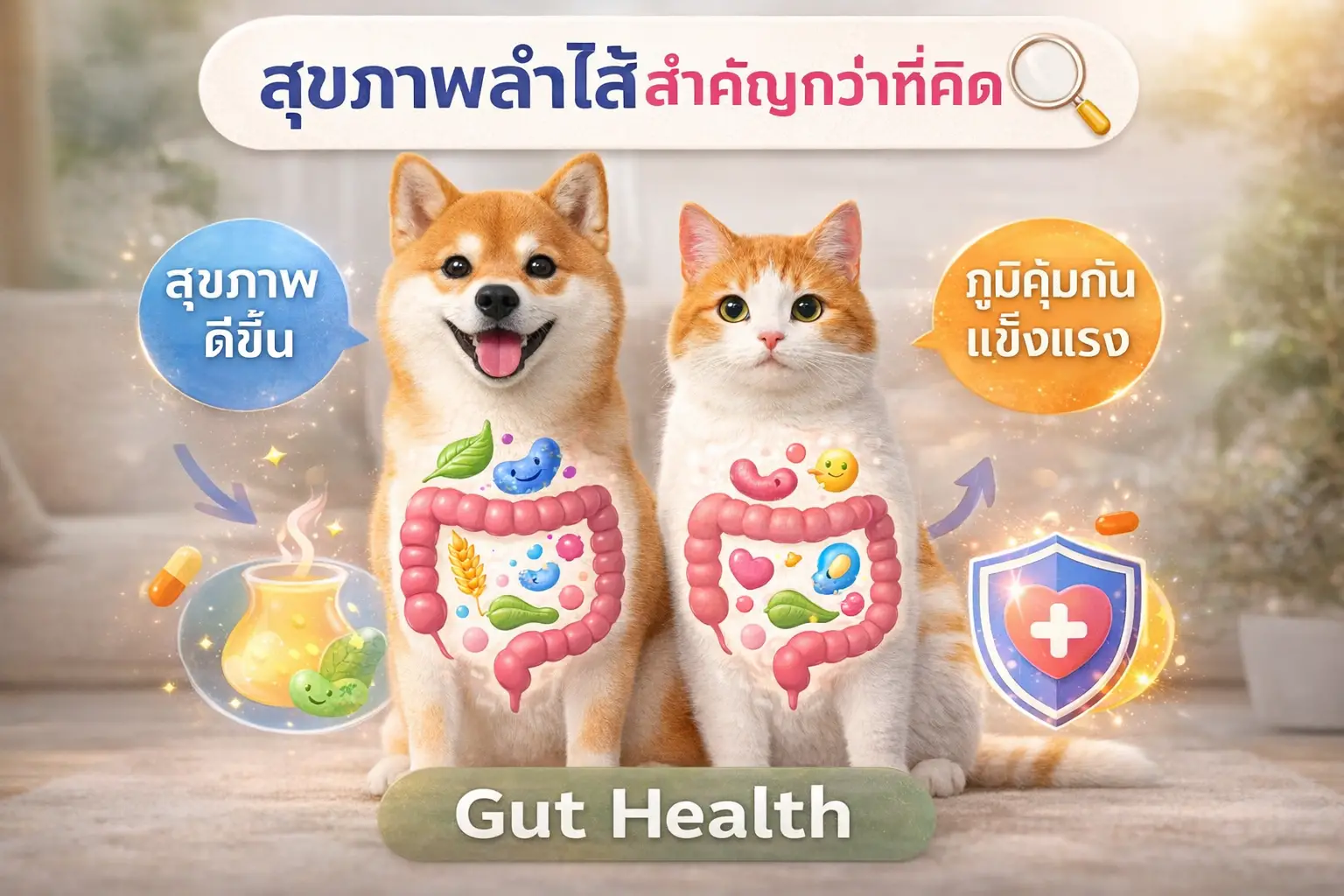
สุขภาพลำไส้สำคัญกว่าที่คิด

What Is Gut Health in Dogs and Cats—and Why Should Pet Parents Care?

What Is Gut Health in Dogs and Cats—and Why Should Pet Parents Care?Gut health means the balance of the digestive system and the gut microbiome (the community of beneficial microorganisms living in the intestines).When this system works well, it supports overall health in many ways, such as:Efficient digestionBetter nutrient absorptionNormal bowel movements (well-formed, consistent stools)Stronger immunity and overall vitalityOn the other hand, when the gut becomes imbalanced, pets may experience diarrhea, bloating, gas, strong stool odor, loss of appetite, or a general decline in wellness.Common Signs That Your Pet’s Gut May Be Out of BalanceMany pet parents often ask, “Is this related to gut health?”Here are some common signs to watch for:Soft stools or diarrhea / more frequent bowel movements than usualHard stools, straining, constipation, or irregular bowel habitsBloating, gas, stronger stool odorPoor appetite, weight fluctuations, low energy(Cats) frequent vomiting or hairballs along with inconsistent stools⚠️ See a veterinarian immediately if symptoms are severe—such as blood in stool, extreme lethargy, repeated vomiting, or signs of dehydration.What Usually Causes Digestive Issues in Dogs and Cats?Common causes include:Switching food too quickly (the gut doesn’t have time to adapt)Stress, environmental changes, or routine disruptionEating unsuitable foods or foreign objectsGetting the wrong type or amount of fiber for a sensitive gut(Cats) low water intake, which can lead to constipation or hard stoolsAn imbalance of gut microorganismsWhy Do Pets Often Have Digestive Upset After a Food Change?A major reason is changing food too fast, which can disrupt digestion and the gut microbiome—especially in pets with a sensitive gut. During the transition, monitor:Stool quality (shape, frequency, odor)Appetite and energy levelWater intakeIf diarrhea begins, pause at the current ratio for 1–2 more days. If symptoms worsen or persist, consult your veterinarian.Prebiotics vs Probiotics vs Postbiotics: What’s the Difference?1) What Are Prebiotics?Prebiotics are fibers or certain carbohydrates that the body doesn’t fully digest. They act as food for beneficial bacteria in the gut.They’re often associated with better microbial balance and more consistent stools.Common prebiotics found in pet food:FOS (Fructooligosaccharides)MOS (Mannan-oligosaccharides)InulinGOS (Galacto-oligosaccharides)β-glucans (often from yeast or certain grains)Plant fibers such as beet pulp, psyllium husk, cellulose (sometimes used to support stool formation)Content note: Some “dietary fibers” can function like prebiotics, but results depend on the type, amount, and each pet’s gut sensitivity.2) What Are Probiotics?Probiotics are live beneficial microorganisms that, when consumed in appropriate amounts, may help support gut balance.Common probiotics used in pet foods or supplements:Lactobacillus (e.g., L. acidophilus, L. rhamnosus)Bifidobacterium (e.g., B. animalis)Enterococcus faecium (in some formulas)Bacillus (e.g., B. subtilis, B. coagulans) — spore-forming, more stableCertain yeasts such as Saccharomyces boulardii (more common in supplements)Key points to know:Because they are live, stability can be affected by heat, moisture, and manufacturing processesLabels may show CFU counts or specific strains, which can impact effectiveness3) What Are Postbiotics?Postbiotics are beneficial substances produced by probiotics (such as metabolites or components from beneficial microbes).They’re often described as more stable, making them suitable for formulas that require consistent quality over time.Common examples (often referenced in pet nutrition):Yeast fermentate / yeast postbioticCertain yeast-derived components used in related concepts (e.g., β-glucans, mannan fractions)Some fermentation-related metabolites such as certain organic acids (in some formulas)How to Choose: Pre / Pro / PostbioticsIf your pet has inconsistent stools or a sensitive gut, many start with formulas containing fiber + prebiotics in appropriate amountsIf you want consistent, long-term support, formulas with postbiotics are often chosen for their stabilityProbiotics may be included in foods or supplements, but consider stability and storage conditions✅ Note: Too much prebiotic fiber in some pets may cause gas, bloating, or diarrhea. Choose an amount suitable for your pet’s sensitivity, and consult a veterinarian if symptoms don’t improve.SummaryPrebiotics = food for beneficial gut bacteria (e.g., FOS/MOS/Inulin)Probiotics = live beneficial microorganisms (e.g., Lactobacillus/Bifidobacterium)Postbiotics = beneficial substances produced by microbes; often more stable for long-term useIf Your Dog or Cat Has Gut Issues, Where Should You Start?Choose food formulated to support digestive healthLook for formulas with fiber + prebiotics/postbiotics in suitable amountsTransition food gradually (7-day schedule)Ensure adequate water intake (especially in cats)Reduce stress and make routine changes slowlyIf symptoms persist or are severe, consult a veterinarianMoochie’s Approach to Digestive HealthAt Moochie, we believe a pet’s well-being starts from within.Food isn’t designed just to satisfy hunger for one meal—it’s made to support long-term health.Our key principles include:Selecting ingredients suitable for sensitive digestionNutrition that supports gut balanceEveryday care that’s practical and sustainable for pet parentsRecommended Formulas for Pets with Sensitive DigestionExplore our products at: Moochie with Chicken Liver (Digestive Care) for dogsExplore our products at: Pate with Anchovy (Digestive Care) for catsSuitable for pets who experience:Frequent diarrheaInconsistent stoolsBloating or digestive sensitivityDigestive support highlights:Contains prebiotics to support beneficial gut bacteria balanceSpinach to provide fiber for healthy bowel movementsCoconut oil to support gentle digestion and gastrointestinal comfortFeeding During a Formula ChangeWe recommend a gradual transition within 7 days to reduce the risk of diarrhea and help your pet adjust comfortably.FAQ: Common Questions About Gut Health and Bowel Movements in PetsWhat do prebiotics do?They support beneficial gut bacteria and are linked to digestion and more consistent stools.What is FOS?FOS is a type of prebiotic that feeds beneficial bacteria and helps maintain gut balance.What can cause diarrhea in dogs?Common causes include switching food too quickly, eating unsuitable foods, stress, or gut imbalance. If severe or persistent, consult a veterinarian.What causes constipation in dogs?Often related to low water intake, insufficient fiber, low activity, or stress. If your dog can’t pass stool for a long time or seems in pain, see a veterinarian.How does fiber help constipation?Fiber helps stool form and regularity and supports intestinal movement—along with adequate hydration.Can frequent constipation in cats be related to food?Yes. Water intake, fiber, and digestive sensitivity can all play a role. If constipation is severe or your cat seems unwell, consult a veterinarian.Can prebiotics help with cat stool issues?As a type of fiber, prebiotics may support stool consistency and gut balance in some cases.Are frequent vomiting/hairballs in cats related to digestion?They can be—especially in indoor cats with sensitive digestion and hairball management needs.Can stress cause diarrhea in cats?Yes. Changes in environment or routine can affect the digestive system in some cats.Updated on : 28 February 2026

7 tricks in adjusting your dog’s behavior to being potty trained!

  Have you ever just chill, relax, but suddenly smell a weird odor, causing you to block your nostrils from your dog not defecating in the right place? Whether it's the floor, in the corner of the room, the rug, the legs of the table, the curtains, the bed, or our favorite set of sofas. Anyone who encounters this problem will definitely have a headache because in addition to the damage that has occurred, it’s followed by the issue of cleaning, which is quite difficult. Plus, the unpleasant smell as well. Many people may wonder, why is their dog not defecating in the right place? How do we fix this problem? This article has compiled solutions for you.     Why is my dog unable to defecate in the right place? Reasons that your dogs are not defecating in the right places may be caused by different factors such as:   ●  The dog may be too young or too old. It may be difficult for them to adjust at first. ●  Not yet familiar with the place provided for excretion. ●  Caused by underlying health problems. ●  Not eating and excreting on time. ●  Have stress or anxiety. ●  Other factors involved, which may differ for each dog or breed.   7 tricks to adjust their behavior and training dogs to excrete in the right places 1. Allow them to get used to the time and place for excretion Dogs should be trained to excrete at intervals. When it's time, take the dog to the excretion spot immediately. This will help your dog adjust to the behavior of excretion naturally.   2. Use the same command words repeatedly or often When it's time to excrete, try using the same words or phrases with them. This will allow the dog to be familiar and adapt to a behavior, such as ‘come poop’, ‘come pee’, ‘go to the toilet’, ‘pee here’, etc.   3. Schedule a meal time To prevent your dog from eating and excreting all day; if your dog can’t finish their meal in time, collect or empty their food within half an hour. Don't leave it out.   4. Use the same smell or marks to practice their excretion The same smell or marks that your dog excrete can be used to train them to excrete in the right spot.   5. Immediately give an order if the dog excretes outside the designated spot Give commands like ‘No’, which are specific words that deny the dog to excrete outside the spot, with a serious tone and demeanor.   6. Do not punish or scold angrily In training, you should gradually train them, don’t use emotions, don’t punish them with violence, and don't scold the dog angrily.   7. Take him to see a veterinarian or specialist Try consulting a veterinarian or a specialist to find the right way in training your dog.   Studying and understanding your dog’s behavior, habits, and their breed will help us understand them more. Potty training is another matter that we need to focus on because the habit of excretion helps them to have a good excretory behavior and owners, like us, are allowed to feel relieved, we can breathe through our lungs freely because the house is clean, there is no unpleasant smell from excretion. When the dog obeys orders or begins to behave in a better way, we should complement and give them treats or other rewards that your dog favors. This will help the dog learn and understand what we want to communicate faster.   Source https://www.jojohouse.com/ฝึกน้องหมาฉี่เป็นที่/ https://pet.kapook.com/view204786.html https://www.yespetshop.com/th/articles/97510 https://thonglorpet.com/th/diary/การแก้ไขการขับถ่ายไม่เป็นที่

Are clothes necessary for dogs and cats? Which breeds are required to wear them?

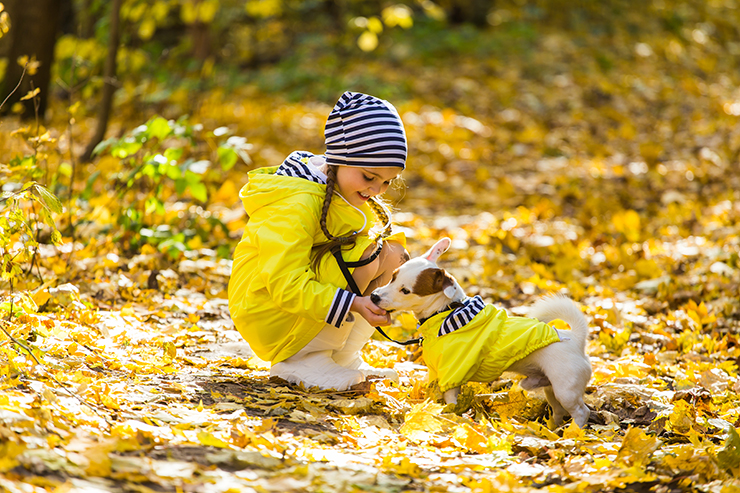
  When entering winter, we will see a variety of winter fashion out there, a variety of eye-catching colors, which is no different with pet’s fashion clothes that are equally bold. Seeing the choices of clothes picked for them is like bringing a small fashion week to the house. In addition, we are united in showing off their cuteness and adorableness, often seen on social media, but in fact, has anyone ever wondered how necessary those clothes are? Do dogs and cats really need to wear coats in winter? Let's find out.     ● Are clothes necessary for dogs and cats? The necessity of clothes for dogs and cats may not be clearly measured because there are many factors involved, such as the length and thickness of their hair according to their breed, the environment of the house, and the overall habitat. If you are in Thailand, there may not be as much winter or the temperature may not be as low as living in a country with a cold climate, however, it would be better to observe if your pet has a cold or not.   Do: If your pet has symptoms such as curling up, tremors, and pale gums, they may have a cold. Clothes should be worn for them by choosing the right amount of thickness on the fabric, according to the hair length of their breed. Don’t: If your pets show resistance in wearing clothes, you shouldn't force them because there may be some undesirable behaviors that follow through. For example, stress, fear, and frustration, which can have negative effects.   ● Which breeds need clothes during the winter? Dogs: Such as Greyhound, Dalmatian, French Bulldog, Chinese Crested, Pug, Chihuahua, Dachshund, Miniature Pinscher, and Jack Russell Terrier Cats: Such as Sphynx, Devon Rex, Siamese Cat, Abyssinian cat, and Bambino   In addition to letting pets wear clothes during the cold weather, we may look for other suitable ways to help relieve the cold for dogs and cats, such as allowing them to sleep on a warm bed and avoid taking them outside. For those who raise pets in a semi-open or semi-closed manner, during cold weather, limit the amount of time your pet is outdoors. Including the temperature in the house that can be adjusted to an appropriate temperature, this will help them get warmer and relieve coldness.   Sources https://www.central.co.th/e-shopping/true-or-fake-dog-and-cat-should-wear-cloth-in-cold-season https://www.petsbest.com/blog/dogs-wear-coats/ https://www.pawtracks.com/cats/cat-clothes-cold-weather/

What to do in the cold weather? 6 tips to take care of your pets in winter

  The cold wind has begun to blow, you can already feel the coldness. Many people may already start to plan for a family trip, both local trips and traveling abroad. But don't forget to take care of your pets, like your dogs and cats. It’s a must to prepare them for the cold weather, especially when the weather is rapidly changing like this. Our pets can get sick and ill very easily because of the weather since they aren’t able to adapt well. Today, we have 6 great tips for taking care of your pets during the winter.     Tips for taking care of your pets in winter 1. Always giving your pets some clothes to keep them warm Start off with searching for clothes that help keep your pet warm by choosing comfortable fabrics that fit their shape and size. These clothes should also be easy to clean.   2. Pay close attention to their mattress or cushion Besides clothes, another thing to pay attention to is their mattress or seat cushion. The mattress should be thick and soft with good ventilation. This will prevent pets from directly touching the cold floor.   3. A strong immune system is the first line of defense Annual vaccination or vaccines against certain diseases can help build your pet’s immune system. By regularly checking their vaccination booklet and the date should not be overdue.   4. Focusing on the main food, but also supplements We need to focus on our pet’s food, regardless of the weather. We should select a food formula that is full of nutrients and suitable for the ages of our dogs and cats. In addition, you may add supplements to some meals, it's even better that way.   5. This zone is perfect! The next important tip is picking out a zone or area that is suitable for pets to relax, lie down, play or do various activities, in which the air should be ventilated, not too hot, not humid, and not too cold.   6. About fur and bathing Even though the weather is cold, you still need to take care of your pet’s cleanliness, keep their fur from getting tangled, give them a bath and blow dry them completely. You may select a time during late afternoon or during the day when the weather is not too cold. Taking care of their fur and cleanliness will help reduce skin diseases caused by moisture and dirt caught in their hair for sure.   Tips: When pets get sick, can you give human medicine to them? Highly not recommended! When pets get sick, they should be taken to the veterinarian to assess any symptoms and they should be taking medicine under the doctor's order, which is safe and best for pets.   When you’ve already prepared for your pet’s health during the cold weather like this, you can now pack your bags and travel with ease. Oh! And don't forget to take your pet out for some exercise regularly as well. No matter how cold the weather may be, with these tips, your pets can fight the weather comfortably for sure, because your dogs and cats are happy, have good health, and are far away from any disease and sickness, and of course, owners are happy as well.   Source: https://namping.com/2020/01/31/เรื่องหนาวๆ-ของมะหมามะแ/ https://www.yippeehappy.com/th/blog/detail/740/การดูแลสัตว์เลี้ยงในช่วงฤดูหนาว