All Blogs

>>

Blog

Ways to cool down your pet during Summer!
2022-04-29 | 10 Mins read

In this furious heat, strong sunlight, temperature exceeding the thermometer, many of you may be thinking of favorite, diverse ways to cool down. For example, devouring ice cream, turning on the air conditioner, or even random showers. But what about your pets? How do you find proper ways to cool down your pets? Pets, like us, can also feel the heat, causing heatstroke. For those of you who still haven’t got ideas to cool down your dogs and cats at home, we have some amazing tips and tricks just for you!

► Heat Stroke in pets


If you find your pets having any of the following symptoms: rapid heartbeat, high body temperature, salivation, breathlessness, vomiting, dizziness, abnormal gazes, or even having a seizure (other abnormalities can also be observed), both after outdoor activities or on a hot, sunny day, you should find a way to cool them down right away.


► 7 simple ways to cool down your pets


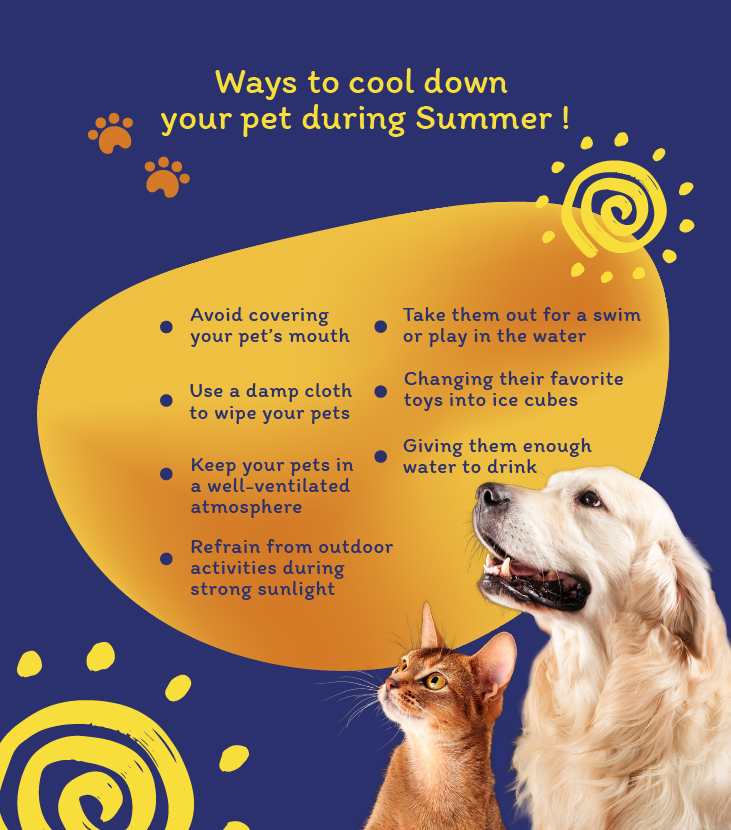
You already know the symptoms of heat stroke and ways to observe such symptoms. Let’s look at some simple ways to cool down your pets. Simple ways to relieve heat and reduce heat stroke are as follows:

1. Use a damp cloth to wipe your pets
Soak a cloth or towel in plain or cold water, wring it out, and gently wipe your pets fur, face, body, stomach, and paws. This will help relieve and cool down the body temperature of your dogs and cats.

2. Avoid covering your pets mouth

When your pet is panting and drooling, gaming your pet should be avoided, especially in dogs. Since dogs and cats don’t have sweat glands on their skin, it causes them to open their mouths with their tongues hanging out, as can be commonly seen, and it’s a way that they relieve heat from their body.

3. Giving them enough water to drink
It’s a must to provide your pets with enough water, around the corners of your house, and if you take your pets outside, you should also bring extra water for them. On really hot, sunny days, you can provide them with cold or ice water to help them relieve heat as well.

4. Keep your pets in a well-ventilated atmosphere
You should not allow pets to be in a car for a long period of time, as well as closed rooms where air doesn’t flow.
You should keep your pets in a well-ventilated room or atmosphere; if the temperature rises too high, you should turn on the fan or air conditioner to help them relieve heat from their body.

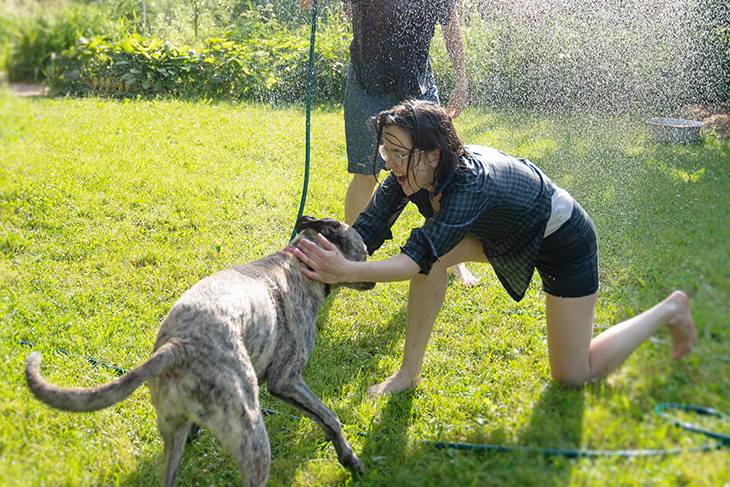
5. Take them out for a swim or play in the water
Taking your pets out for a swim or playing in the water at home can be another activity for your pets. They can have fun, exercise, and relieve body heat at the same time.


6. Changing their favorite toys into ice cubes
You might usually give your dogs and cats something to play with or chew on, whether it’s a ball, plushie, or a tether in various shapes. Try changing these toys into ice cubes; gently toss them around, allowing them to gnaw, bite, and lick the ice cubes. It’s a fun activity for them and can relieve body heat very well.

7. Refrain from outdoor activities during strong sunlight
On hot, sunny days, pets should not be allowed to do outdoor activities or exercise. This is to avoid the occurrence of heat stroke symptoms.


Observing your pets and their behaviors, from time-to-time during the hot weather, will allow you to prevent your pet’s heat stroke in a timely manner. Which includes helping your pets relieve body heat with methods as mentioned above. For example, using a damp cloth to wipe your pets when they are found to have unusual symptoms of tiredness; giving your pet enough water or cold water on hot, sunny days, or changing their favorite toys into ice cubes. All of these can help relieve symptoms and can also help prevent heat stroke in a way.


Source

https://www.usmagazine.com/celebrity-news/news/10-ways-to-keep-your-dog-cat-cool-this-summer/

https://www.purina.com/articles/dog/care/6-tips-how-to-keep-dogs-cool

7 tricks in adjusting your dog’s behavior to being potty trained!

  Have you ever just chill, relax, but suddenly smell a weird odor, causing you to block your nostrils from your dog not defecating in the right place? Whether it's the floor, in the corner of the room, the rug, the legs of the table, the curtains, the bed, or our favorite set of sofas. Anyone who encounters this problem will definitely have a headache because in addition to the damage that has occurred, it’s followed by the issue of cleaning, which is quite difficult. Plus, the unpleasant smell as well. Many people may wonder, why is their dog not defecating in the right place? How do we fix this problem? This article has compiled solutions for you.     Why is my dog unable to defecate in the right place? Reasons that your dogs are not defecating in the right places may be caused by different factors such as:   ●  The dog may be too young or too old. It may be difficult for them to adjust at first. ●  Not yet familiar with the place provided for excretion. ●  Caused by underlying health problems. ●  Not eating and excreting on time. ●  Have stress or anxiety. ●  Other factors involved, which may differ for each dog or breed.   7 tricks to adjust their behavior and training dogs to excrete in the right places 1. Allow them to get used to the time and place for excretion Dogs should be trained to excrete at intervals. When it's time, take the dog to the excretion spot immediately. This will help your dog adjust to the behavior of excretion naturally.   2. Use the same command words repeatedly or often When it's time to excrete, try using the same words or phrases with them. This will allow the dog to be familiar and adapt to a behavior, such as ‘come poop’, ‘come pee’, ‘go to the toilet’, ‘pee here’, etc.   3. Schedule a meal time To prevent your dog from eating and excreting all day; if your dog can’t finish their meal in time, collect or empty their food within half an hour. Don't leave it out.   4. Use the same smell or marks to practice their excretion The same smell or marks that your dog excrete can be used to train them to excrete in the right spot.   5. Immediately give an order if the dog excretes outside the designated spot Give commands like ‘No’, which are specific words that deny the dog to excrete outside the spot, with a serious tone and demeanor.   6. Do not punish or scold angrily In training, you should gradually train them, don’t use emotions, don’t punish them with violence, and don't scold the dog angrily.   7. Take him to see a veterinarian or specialist Try consulting a veterinarian or a specialist to find the right way in training your dog.   Studying and understanding your dog’s behavior, habits, and their breed will help us understand them more. Potty training is another matter that we need to focus on because the habit of excretion helps them to have a good excretory behavior and owners, like us, are allowed to feel relieved, we can breathe through our lungs freely because the house is clean, there is no unpleasant smell from excretion. When the dog obeys orders or begins to behave in a better way, we should complement and give them treats or other rewards that your dog favors. This will help the dog learn and understand what we want to communicate faster.   Source https://www.jojohouse.com/ฝึกน้องหมาฉี่เป็นที่/ https://pet.kapook.com/view204786.html https://www.yespetshop.com/th/articles/97510 https://thonglorpet.com/th/diary/การแก้ไขการขับถ่ายไม่เป็นที่

Are clothes necessary for dogs and cats? Which breeds are required to wear them?

  When entering winter, we will see a variety of winter fashion out there, a variety of eye-catching colors, which is no different with pet’s fashion clothes that are equally bold. Seeing the choices of clothes picked for them is like bringing a small fashion week to the house. In addition, we are united in showing off their cuteness and adorableness, often seen on social media, but in fact, has anyone ever wondered how necessary those clothes are? Do dogs and cats really need to wear coats in winter? Let's find out.     ● Are clothes necessary for dogs and cats? The necessity of clothes for dogs and cats may not be clearly measured because there are many factors involved, such as the length and thickness of their hair according to their breed, the environment of the house, and the overall habitat. If you are in Thailand, there may not be as much winter or the temperature may not be as low as living in a country with a cold climate, however, it would be better to observe if your pet has a cold or not.   Do: If your pet has symptoms such as curling up, tremors, and pale gums, they may have a cold. Clothes should be worn for them by choosing the right amount of thickness on the fabric, according to the hair length of their breed. Don’t: If your pets show resistance in wearing clothes, you shouldn't force them because there may be some undesirable behaviors that follow through. For example, stress, fear, and frustration, which can have negative effects.   ● Which breeds need clothes during the winter? Dogs: Such as Greyhound, Dalmatian, French Bulldog, Chinese Crested, Pug, Chihuahua, Dachshund, Miniature Pinscher, and Jack Russell Terrier Cats: Such as Sphynx, Devon Rex, Siamese Cat, Abyssinian cat, and Bambino   In addition to letting pets wear clothes during the cold weather, we may look for other suitable ways to help relieve the cold for dogs and cats, such as allowing them to sleep on a warm bed and avoid taking them outside. For those who raise pets in a semi-open or semi-closed manner, during cold weather, limit the amount of time your pet is outdoors. Including the temperature in the house that can be adjusted to an appropriate temperature, this will help them get warmer and relieve coldness.   Sources https://www.central.co.th/e-shopping/true-or-fake-dog-and-cat-should-wear-cloth-in-cold-season https://www.petsbest.com/blog/dogs-wear-coats/ https://www.pawtracks.com/cats/cat-clothes-cold-weather/